Active Testbeds

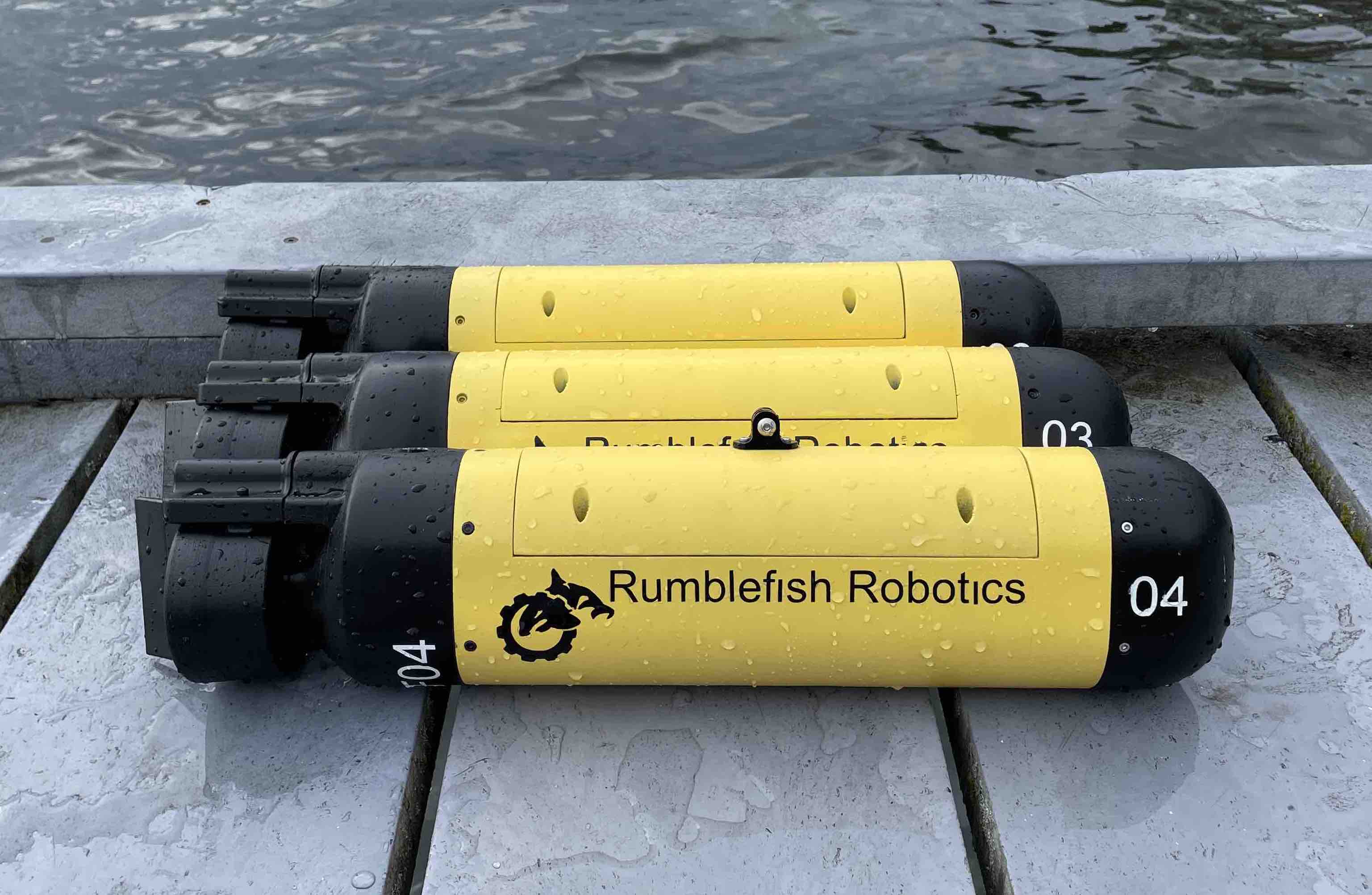
Rumblefish operational engineering testbed staged on dock

OneFish: Experimental Buoyancy & Autonomous Recovery

Simulation is an indispensable tool—especially for synthetic training via sim-to-real workflows—yet we found that many of the true challenges in multi-agent swarm dynamics only surfaced with in-water field testing. Spanning 2019 through 2024, our Longfish research program focused on the empirical, physical exploration of how to construct and run low-cost drone swarms, culminating in the multi-agent OneFish autonomous swarm. The OneFish vehicles serve as our dedicated internal platform for studying coordinated swarm behaviors alongside practical autonomous deployment, recovery, and maintenance routines.

In 2026, we revived the Longfish program to provide real-world hardware targets as we develop and validate our acoustic UUV detection systems.
R&D Heritage

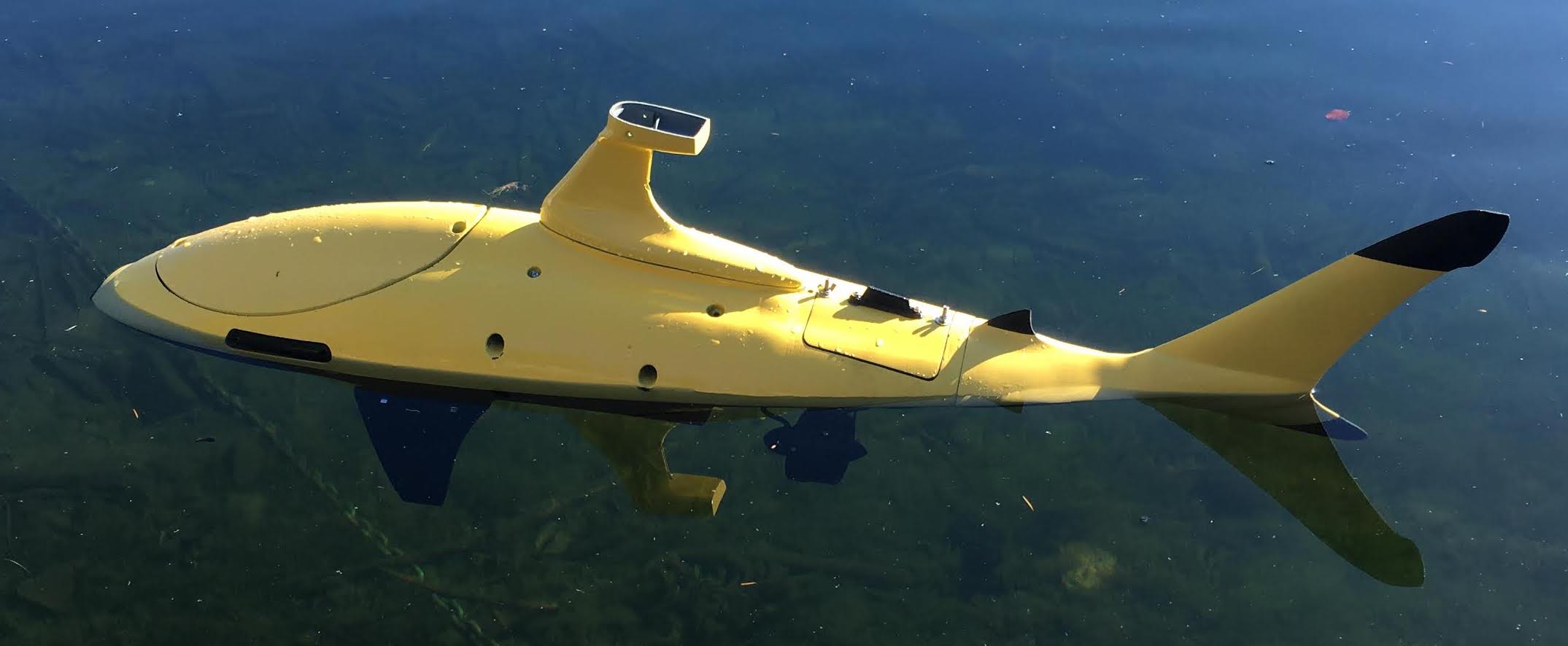
Black Tip bio-inspired robotic shark prototype float trial

Blacktip: 1:1 Biomimetic Testbed & Additive Hull Engineering

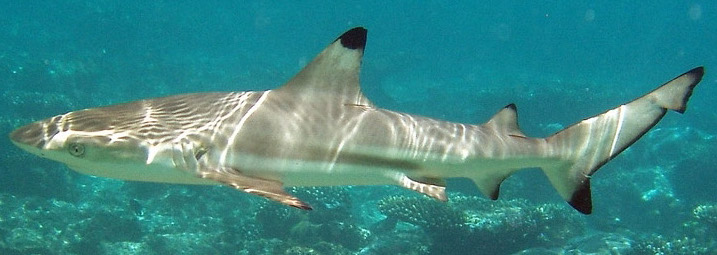
Blacktip reef shark swimming in coastal waters
We developed Blacktip as an experimental platform to investigate biomimicry for underwater hydrodynamics in unmanned underwater vehicles. Modeled at a 1:1 scale on a blacktip reef shark—a morphology chosen for exceptional gliding efficiency and maneuvering—the vehicle allowed us to build directly upon an evolutionary design space refined over millions of years.
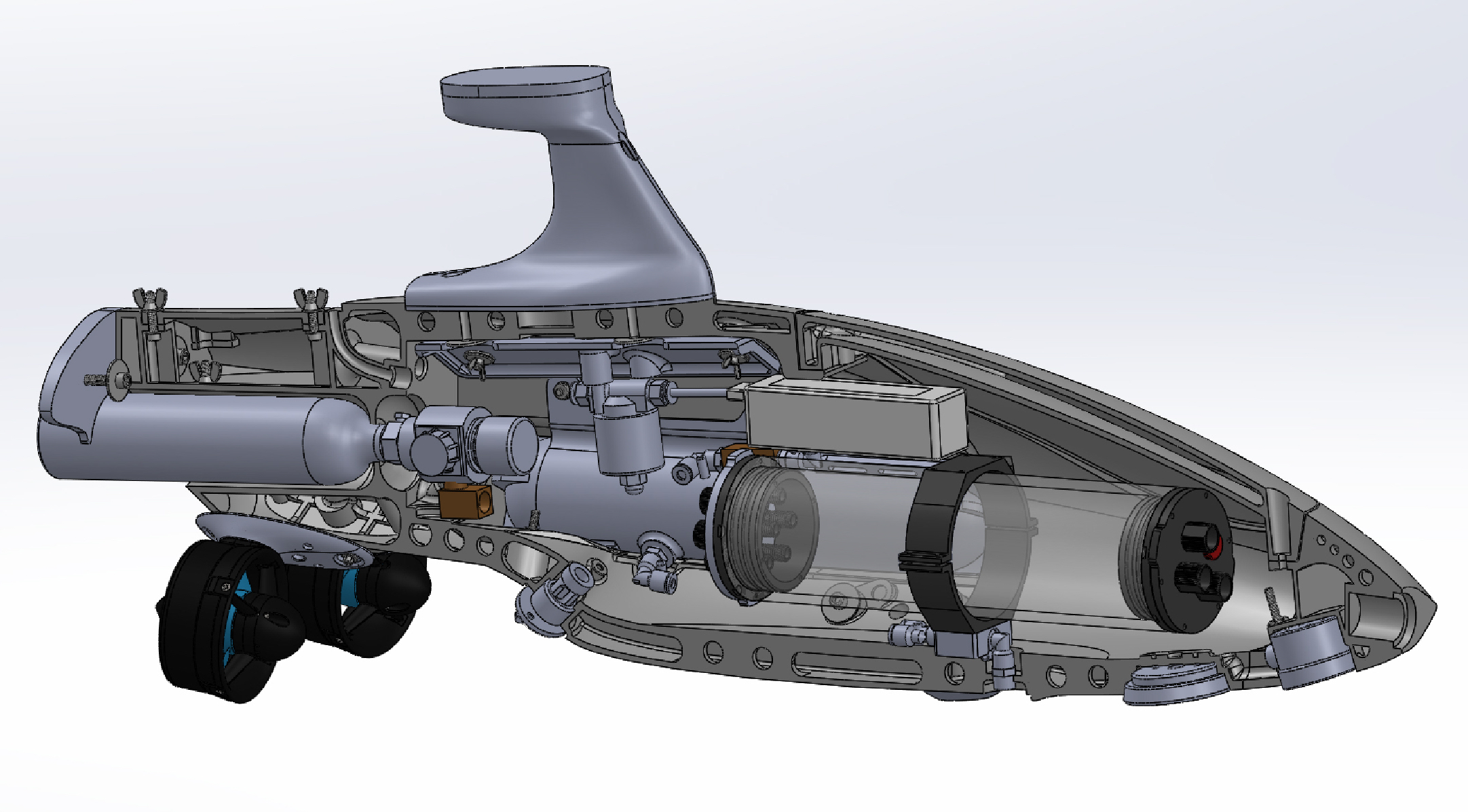
CAD cutaway cross-section assembly of the Rumblefish V20 internal architecture
Spanning 2017 through 2021, the program also served as our primary testbed for additive manufacturing in marine robotics. By exploring large-format 3D printing to produce custom, low-cost pressure hulls and hydrodynamic fairings rapidly, the project established core structural and fabrication methodologies that directly inform our current hull construction techniques.